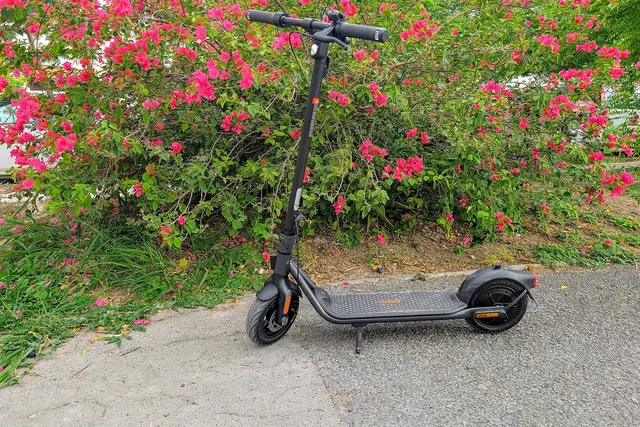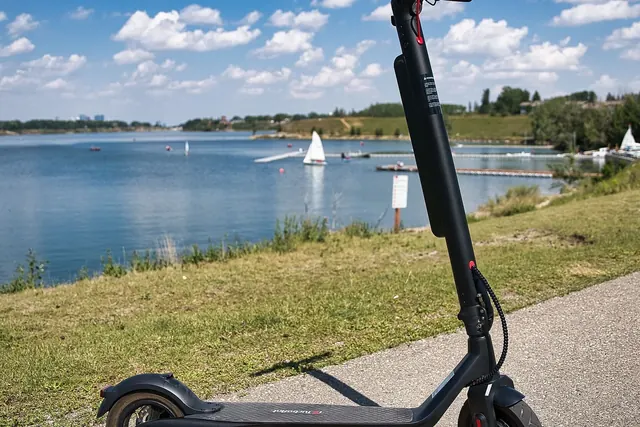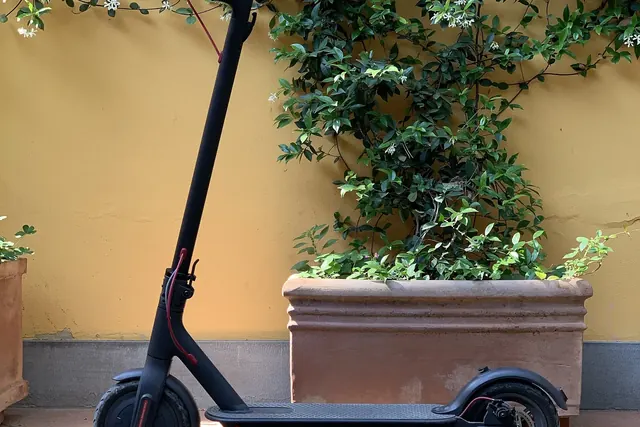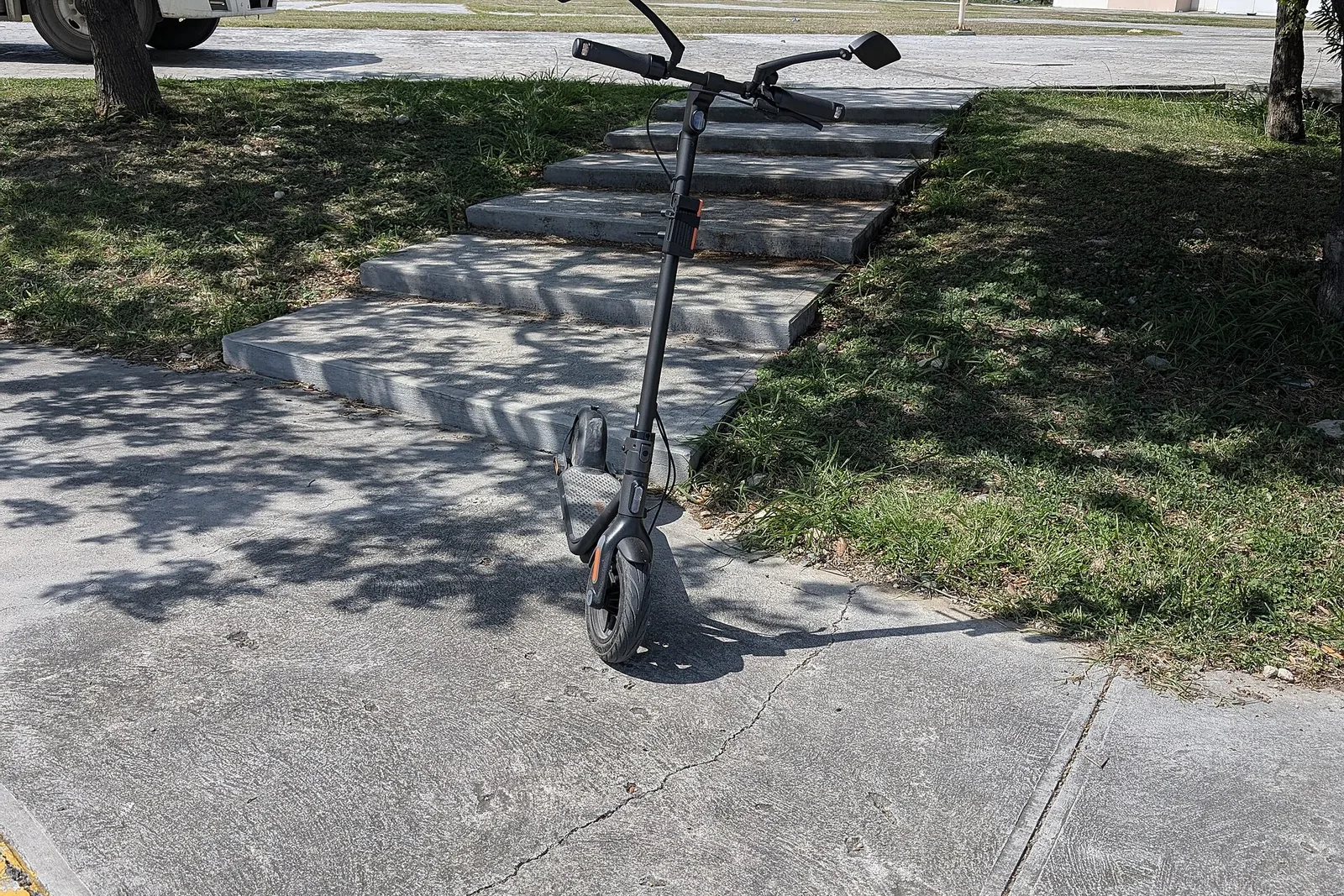
An e-scooter’s spec sheet is really just a handful of figures — power, voltage, capacity, weight, a water-resistance code and a couple of component types — but the numbers only mean something once you know what they’re actually measuring. This page works through each one on its own, so you can read a listing properly rather than comparing headline figures that don’t tell the full story.
Motor power: watts, nominal and peak
Motor power is given in watts (W). Most listings show two figures: nominal (or continuous) power, which the motor can sustain for as long as needed, and peak power, a higher number it can only reach briefly — accelerating from a stop, or climbing a short hill. In most countries, a device only counts as a lightweight e-scooter, rather than a moped, while its power stays at or under roughly 1 kW and its manufacturer top speed at or under 25 km/h, though the exact thresholds vary by country — see powerful & off-road scooters for what happens above that. A higher wattage mostly buys better hill-climbing and acceleration within that cap, not a higher legal top speed.
Voltage, amp-hours and watt-hours
Voltage (V) and amp-hours (Ah) are the two figures printed on a battery label; multiply them together and you get watt-hours (Wh) — the actual amount of energy stored, and the figure worth comparing between models. A 48 V, 12 Ah battery, for example, stores 48 × 12 = 576 Wh. Common pack voltages are 36 V, 48 V and 60 V: a higher voltage generally lets the motor draw power more efficiently, particularly on hills, but it’s the Wh total — not voltage or Ah alone — that mainly determines how far the scooter will go. See battery basics for how cell count and battery chemistry affect this further.
Range: what the Wh figure doesn’t tell you
A higher Wh figure generally means more range, but two scooters with an identical battery can still deliver noticeably different real-world distances. Motor and controller efficiency, tyre type and pressure, rider weight, hills, wind, riding mode and temperature all affect how far a given amount of stored energy actually takes you — and manufacturer range figures are usually measured under close-to-ideal conditions with a light rider. Treat an advertised range as an optimistic upper bound rather than a guarantee.
Weight and load rating
Total scooter weight typically runs from around 12 kg for a light folding model to well over 30 kg for a long-range or dual-motor design. Weight affects portability — up stairs, onto a bus, into a car boot — more than it affects legality. Separately, every scooter has a maximum rider weight (load rating); riding consistently near or above it strains the motor, brakes and frame faster than the spec sheet’s other figures would suggest. See for adults & heavier riders for how this plays out for a bigger rider.
IP rating: reading the two digits
An IP (Ingress Protection) rating is shown as two digits after “IP” — the first for dust, the second for water — with an “X” where a digit hasn’t been tested. IPX4, a common e-scooter rating, means protection against water splashed from any direction: fine for riding in rain, but not for submersion, hosing the scooter down, or charging it while wet. IPX5 adds resistance to a low-pressure jet of water. No common e-scooter IP rating covers full waterproofing, so treat any figure as protection against rain and spray, not against puddles or standing water.
Tyres: three main types
Pneumatic (air-filled) tyres give the best comfort and grip but can puncture; solid or honeycomb tyres never go flat but transmit more shock from the road surface; foam- or gel-filled tyres sit between the two. Tubeless pneumatic tyres use a sealant instead of an inner tube and resist small punctures better than a tubed tyre, though they’re not puncture-proof. See tyres & punctures for maintenance and pressure guidance for each type.
Brakes: why two systems matter
Most e-scooters combine two independent braking systems — commonly an electronic or regenerative brake built into the motor, plus a separate mechanical disc, drum or foot-operated friction brake. Relying on either system alone is riskier, particularly in wet or icy conditions, which is why a scooter with only one working brake type shouldn’t be considered fully roadworthy. See brakes & suspension for how disc, drum and foot brakes compare.
Suspension: comfort, not a legal upgrade
Front or rear suspension smooths out rough pavements and cobbles and reduces strain on the frame over time, at the cost of some extra weight and another component that can eventually need servicing. It doesn’t change what’s legally allowed to ride on public roads — a suspended, off-road-styled scooter is still capped at 25 km/h and roughly 1 kW to count as a lightweight e-scooter rather than a moped, the same as any other model.
Charger output and charging time
A charger’s output, usually given in amps (A) alongside its voltage, largely determines how long a full charge takes: a higher-current charger fills the same battery faster, at the cost of generating more heat over many charge cycles. Two scooters with identical Wh batteries can have quite different charging times simply because they ship with different chargers. This figure doesn’t affect a scooter’s legal category or performance while riding — it only affects how long you wait between rides. See charging, chargers & fire safety for how to charge safely regardless of charger speed.
Display, connectivity and cruise control
Many scooters include a small handlebar display showing speed, battery percentage and sometimes ride mode, and some pair with a phone app for firmware updates, ride history or an extra layer of anti-theft locking. These features are genuinely convenient but don’t affect the core mechanical or legal specs covered above — a scooter with no app at all can be just as roadworthy as one with a full connected dashboard. Cruise control, where fitted, holds a steady speed without the rider keeping the throttle pressed; useful on longer rides, but it doesn’t raise the scooter’s top speed beyond its normal limit.
Reading a spec sheet as a whole
No single figure tells the full story on its own — a high Wh battery paired with an inefficient motor won’t outrange a smaller battery on an efficient one, and a big peak-power number means little if the nominal figure is modest. When comparing two scooters, read nominal power, Wh, weight, load rating, IP rating and brake type together rather than picking out whichever number happens to be printed largest in a listing.
Frequently asked questions
What do W, V and Ah mean on an e-scooter spec sheet?
W (watts) measures motor power, V (volts) is the battery's voltage, and Ah (amp-hours) is its capacity. Multiplying V by Ah gives Wh (watt-hours), the actual amount of stored energy.
What's the difference between nominal and peak motor power?
Nominal power is what the motor can sustain continuously; peak power is a higher figure it can only produce briefly, such as accelerating from a stop or climbing a short hill.
What does an IP54 rating actually protect against?
The first digit (dust) and second digit (water) each describe a specific level of protection — IP54 means limited dust protection and resistance to water splashed from any direction, not full waterproofing or submersion.
Why do two scooters with the same battery capacity get different range?
Range depends on motor efficiency, tyre type and pressure, rider weight, terrain and temperature as well as raw battery capacity, so identical Wh figures don't guarantee identical range.
What's the practical difference between a hub motor and a belt- or chain-driven motor?
A hub motor sits inside the wheel with fewer moving parts and less maintenance; a belt- or chain-driven motor sits in the deck and can deliver power more efficiently, at the cost of an extra component to maintain.