Most e-scooter accidents come down to a handful of avoidable mistakes: misjudging braking distance, being hard to see, or riding somewhere too fast and too close to pedestrians or traffic. This guide covers the habits that make the biggest real difference for a new rider.
Learn the basics somewhere safe first
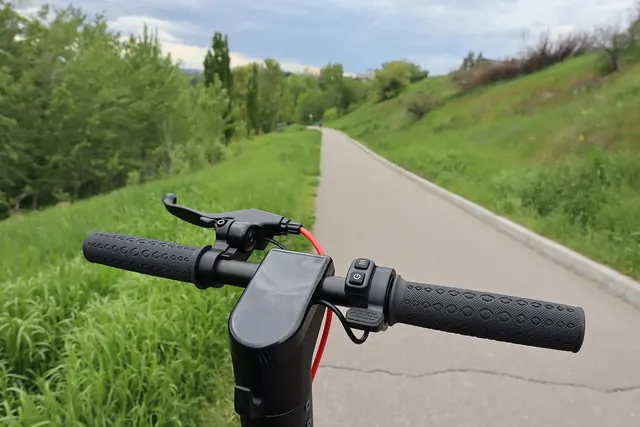
Before riding in traffic or among pedestrians, spend some time in an empty car park, quiet park path or yard getting a feel for the throttle, both brakes, and how the scooter behaves when turning at different speeds. Practise braking hard from a normal riding speed a few times so you know how much distance it actually takes — it’s usually more than it feels like it should be, especially on a wet or gritty surface (see brakes and suspension for how different brake types affect stopping distance). Getting comfortable with balance and control somewhere low-stakes makes every ride afterwards safer.
Being seen matters as much as seeing
A working front light and rear light are a legal requirement in darkness or poor visibility in most places, but visibility is worth taking further than the legal minimum. Running lights in overcast daylight, heavy rain or at dusk — not just after full dark — makes a real difference to how early a driver notices you, and reflective clothing or accessories help even more at night, since a scooter’s own lights only illuminate a small area around it. A rider wearing dark clothing with no lights is genuinely hard to see from a car, especially against streetlights or headlight glare.
Crossing roads and junctions
Pedestrian crossings are one of the riskiest points on any route, because drivers don’t always expect a scooter moving at cycling speed to be using a crossing built for people walking. Slow right down on approach, make eye contact with any driver who might be turning into your path, and don’t assume a car has seen you just because it’s stopped or slowing. In many places, official guidance is that it’s safer to dismount and walk the scooter across a pedestrian crossing rather than ride it, after confirming drivers are actually giving way.
Ride at a speed that matches the surroundings
Near pedestrians, on a busy pavement or in a crowded old-town street, riding at anything close to an e-scooter’s top speed is both risky and, in several places, against the rules — official guidance in many countries calls for slowing to walking pace or below when passing close to pedestrians. Save higher speeds for open cycle paths where you have clear sightlines and room to react, and always leave more following distance than you would in a car, since a scooter’s smaller wheels and lighter weight make it far more affected by a pothole, wet leaves or a sudden stop by whoever’s ahead of you.
One rider only
Carrying a second person is against the rules in most places unless the scooter has a proper passenger seat and that passenger is also wearing a helmet — it’s not just a legal issue, it also makes the scooter significantly less stable, harder to balance and slower to stop. Riding two-up is one of the more common causes of a fall reported in traffic-safety guidance, precisely because most e-scooters simply aren’t built or weighted for a second rider.
Protective gear worth wearing
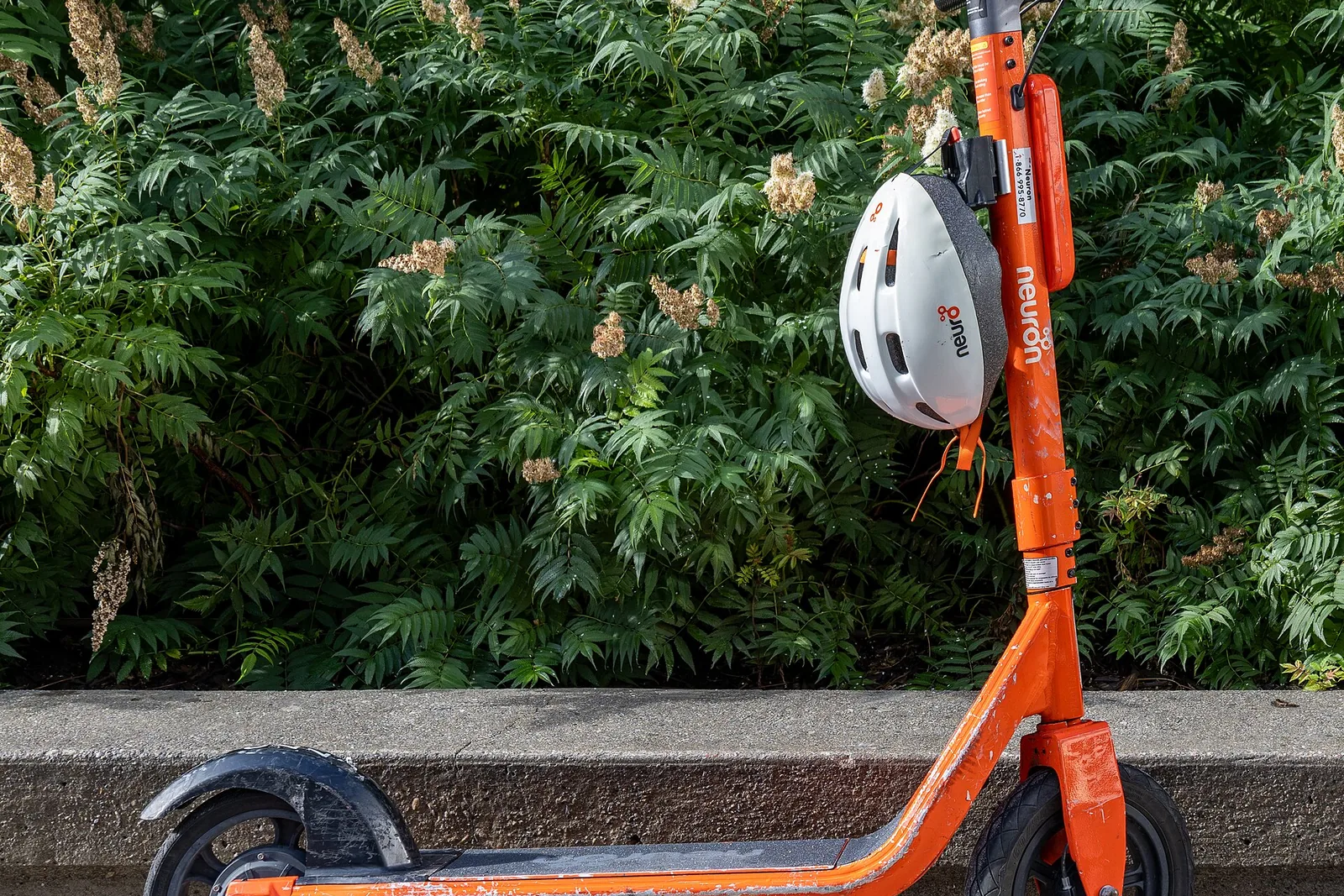
A helmet is legally required for younger riders in many places and strongly recommended for everyone else, since head injuries are consistently the most serious outcome of an e-scooter fall — check your own local rule if you’re unsure whether a minimum age applies to you. Closed shoes with grip, rather than sandals or slippery soles, make a real difference to keeping your footing on the deck, and long sleeves or trousers reduce the scrapes from an inevitable minor tumble.
Weather, surfaces and the state of your tyres
Wet leaves, painted road markings, tram tracks, cobbles and any patch of ice are all far more slippery than they look, and a scooter’s smaller wheels find far less grip on them than a car’s or even a bicycle’s. Slow down noticeably before any of these, avoid braking hard while crossing them, and see riding an e-scooter in winter for how cold, snow and salt change what’s safe. Worn or underinflated tyres make every one of these surfaces riskier still, so a quick check before setting off — covered in maintenance basics — is a genuine safety step, not just upkeep.
Never ride after drinking
Alcohol affects balance and reaction time on an e-scooter just as it does behind the wheel of a car, and many countries set a legal blood-alcohol limit for e-scooter riders, enforced with real fines. Check your own country’s limit rather than assuming it’s the same as for cyclists or that none applies at all — and beyond the legal risk, a scooter’s narrow footprint and quick handling make it far less forgiving of slowed reactions than most people expect, so treat “just a short ride home” after drinking as a genuine risk, not a technicality.
Common mistakes that catch new riders out
Riding one-handed to check a phone, wearing both headphones so you can’t hear approaching traffic, and simply riding faster than your own reaction time and the scooter’s brakes can handle are the mistakes that come up again and again in rider-safety guidance. None of them feel dangerous in the moment, which is exactly why they cause more falls and near-misses than obviously risky behaviour does — staying deliberately cautious for the first weeks of riding, until braking and balance become second nature, prevents most of the accidents that happen to beginners.
Frequently asked questions
Where should I practise riding an e-scooter for the first time?
An empty car park, quiet path or open yard, away from traffic and pedestrians, is the safest place to get used to the throttle, brakes and balance before riding anywhere busy.
Do I need lights during the day?
Lights are legally required in darkness or poor visibility in most countries, but running them in overcast daylight or heavy rain also makes you easier to see and costs nothing extra.
Is it safe to ride an e-scooter across a pedestrian crossing?
Riding across at full speed is risky, since drivers don't always expect a scooter to be moving at cycling speed on a crossing. In many places, official guidance is to dismount and walk the scooter across after confirming drivers have seen you.
Can two people ride one e-scooter?
No — in most places it's against the rules to carry a passenger unless the scooter has a proper passenger seat, and it also makes the scooter far less stable and harder to stop.
What's the single most common beginner mistake?
Overestimating how quickly an e-scooter stops. Even a good brake needs more distance than most new riders expect, especially on a wet or gritty surface — leave more room than feels necessary at first.