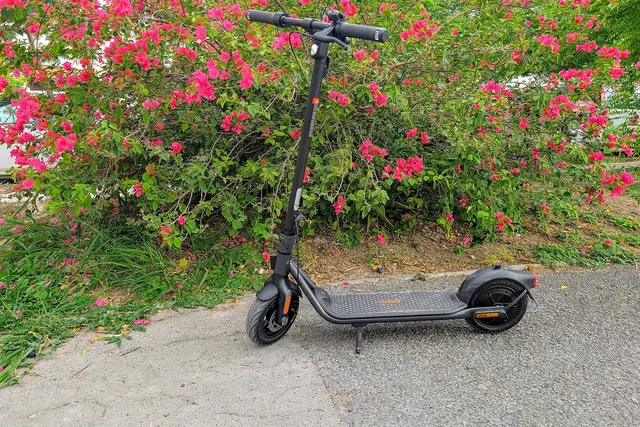
A powerful, off-road-styled e-scooter with dual motors and big knobbly tyres looks like a different machine from a commuter kick-scooter, but the law doesn’t grade on looks. In many countries, a similar threshold decides whether a device counts as a lightweight e-scooter or a moped: a manufacturer top speed around 25 km/h and a motor power around 1 kW, though the exact figures vary by country. Go over the local limit and you’re no longer riding an e-scooter, whatever the marketing calls it.
A common threshold, with local variation
Most countries that regulate e-scooters separately from mopeds draw the line using the same two figures: the manufacturer’s stated top speed and its motor power, typically somewhere around 25 km/h and between 250 W and 1,000 W. It’s the manufacturer’s design speed and rated power that count, not how fast you actually ride or how gently you use the throttle — a device built or sold with a higher top speed or motor rating is outside the e-scooter category from the moment it’s manufactured, regardless of the mode it’s normally ridden in. Above that threshold, a device is generally treated as a moped-class vehicle needing type approval, registration and insurance. Because the exact numbers differ by country, check your own transport authority’s current figures before assuming a scooter you’re eyeing up stays within the e-scooter category where you live.
Dual motors and combined power
A dual-motor setup roughly doubles acceleration and hill-climbing ability, and plenty of dual-motor scooters on the market are tuned to keep combined power within the typical e-scooter cap precisely so they still qualify. But some performance-focused dual-motor models are built well beyond it — 2,000 W or more combined isn’t unusual in off-road-marketed ranges. Before buying, check the manufacturer’s stated total power rating, not just the number printed on the box or in an ad, since “up to” figures sometimes describe a short burst rather than the continuous rating that matters for classification.
Off-road tyres and suspension don’t change the category
Knobbly off-road tyres, long-travel suspension and a rugged frame affect how a scooter handles rough terrain — they say nothing about its legal category. A scooter capped at a typical e-scooter limit with aggressive off-road tyres is still a lightweight e-scooter; a smooth-tyred, minimalist-looking device built well beyond that limit is still legally a moped. Judge the category by the manufacturer’s speed and power figures, not the styling.
Removing or bypassing a speed limiter
Some e-scooters ship with the motor capable of more than the legal cap but software-limited to stay within it; unlocking or bypassing that limiter is not a grey area in most places. Doing so takes the device out of the e-scooter definition the moment it can exceed the limit, whatever speed you actually ride at afterwards — it then needs the type approval, registration, licence and insurance of a moped before it can legally be used on public roads. Riding an unregistered, unlimited device on the road exposes you to the same enforcement as riding any other unregistered motor vehicle. See how to choose an e-scooter for how the speed and power figures work day to day.
Riding off public roads
Traffic rules generally apply to roads, paths and areas open to public traffic — not to genuinely private, enclosed land used with the landowner’s permission, though exactly what counts as “public” varies by country. That gives an over-the-limit or unregistered off-road device somewhere it can realistically be used. It doesn’t extend automatically to public forests, beaches, parks or trails that the public has a right to walk or cycle on, even if they feel remote — those generally still count as public space for traffic-law purposes. If you’re planning to ride a powerful or modified device off-road, check with the landowner and, where relevant, the local authority, rather than assuming “off-road” is a legal loophole.
Why “sport” and “off-road” modes exist
Some scooters ship with selectable ride modes — often labelled eco, normal and sport, or road and off-road — that change how much of the motor’s power reaches the wheel and how the throttle responds. A sport or off-road mode that unlocks power beyond the device’s own type-approved figure has the same effect as removing a limiter: it takes the scooter outside the e-scooter category the moment it’s capable of exceeding the limit, not only while the mode is actively selected. If a listing advertises a mode that pushes speed or power above the local e-scooter limit, treat the device as a moped-class vehicle for registration purposes, whatever mode it’s normally left in.
Reading a “powerful” or “off-road” listing carefully
Marketing language around powerful and off-road scooters is inconsistent between manufacturers: “1,000 W” sometimes means the continuous rating and sometimes the peak figure, and “dual motor” doesn’t tell you the combined total on its own. Before assuming a device is a straightforward e-scooter, look for the manufacturer’s own continuous power rating and manufacturer top speed, ideally from the technical specification sheet rather than the headline description, and treat any figure described as “up to” with some caution. See specs explained for how nominal and peak power differ.
If your scooter turns out to be a moped
A device over your local speed or power limit generally needs to go through the same process as any other moped before it’s used on the road: type approval, registration, a licence plate where applicable, a rider’s licence and compulsory insurance. Check your own country’s transport authority for exactly what applies, and see buying a used e-scooter if you’re weighing this up on a second-hand model.
Frequently asked questions
Is a dual-motor e-scooter automatically illegal to ride on the road?
No, as long as its manufacturer top speed and total motor power stay within your local limits, commonly around 25 km/h and roughly 1 kW. Many dual-motor scooters are tuned to stay within that cap.
Is it legal to remove or bypass a speed limiter?
Almost never. Doing so typically takes the device out of the e-scooter category — it then legally needs type approval, registration and insurance like a moped, and riding it unregistered on public roads is an offence in most places.
Can I ride an over-the-limit off-road scooter on private land?
Traffic law generally applies to roads and areas open to public use, not to fully private, enclosed land used with the owner's permission — but public parks, beaches and open forest trails usually still count as public space, so don't assume 'off-road' means no rules apply.
Do rugged tyres and suspension push a scooter over the legal limit?
No. Tyres, suspension and off-road styling don't affect the legal category by themselves — only the manufacturer's stated top speed and motor power do.
What happens if my powerful scooter turns out to be a moped?
It needs type approval, registration, a licence and insurance like any moped before it can be used on public roads — check your local transport authority for exactly what's involved.