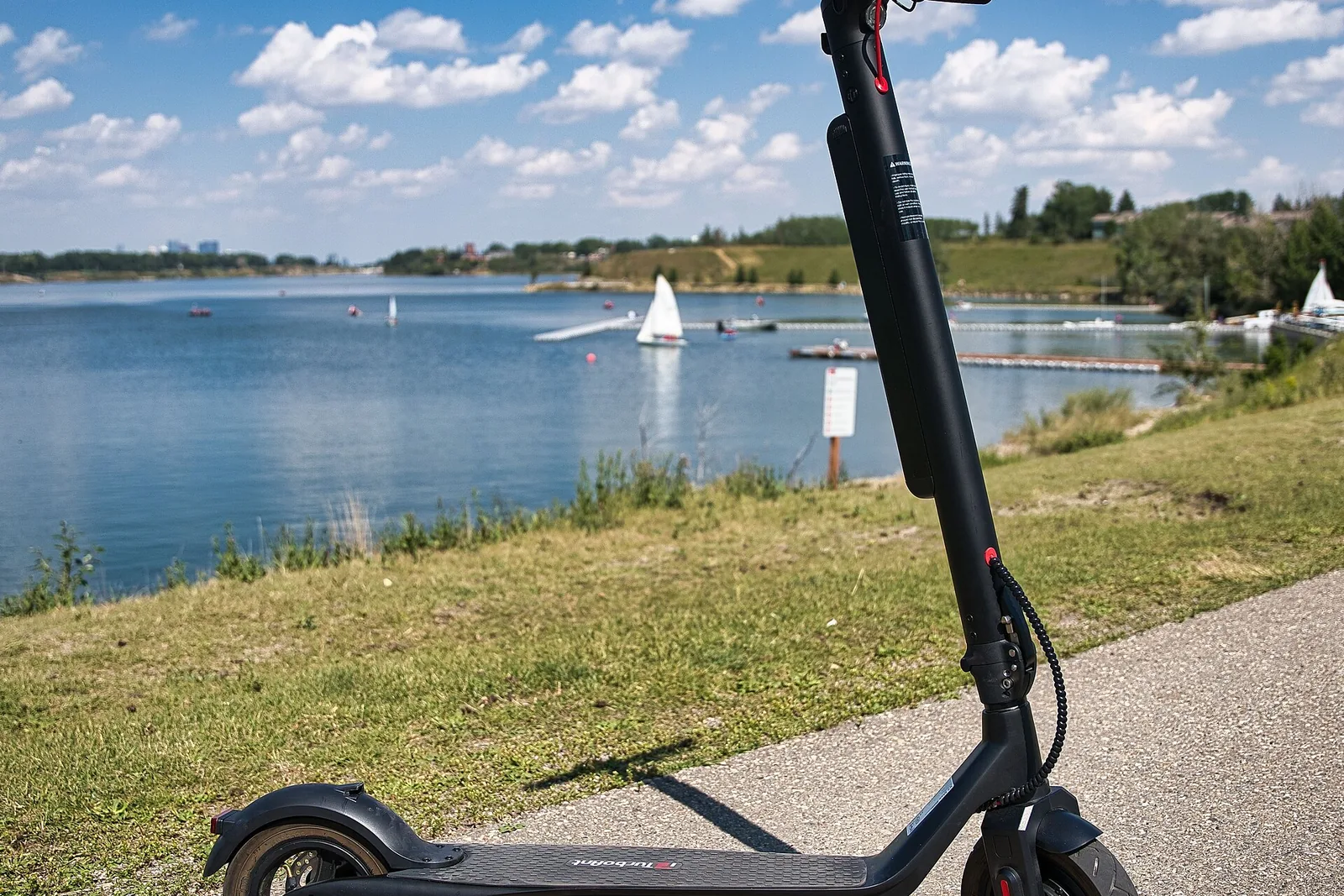
If you’re parking your e-scooter for the season rather than riding through winter, how you store the battery over the next few months matters more than almost anything else you’ll do to it all year. The wrong charge level, the wrong spot or a battery left untouched until spring can quietly shorten its life — or, handled carelessly, turn it into a fire risk. Here’s the routine that fire and rescue guidance and basic battery chemistry both point to.
Charge it to roughly 40–60%, not full and not empty
A lithium battery ages fastest at the extremes: left fully charged for weeks, it sits under more internal stress than it needs to; left to run flat, it risks dropping into a deep discharge that can damage cells outright, sometimes beyond recovery. The middle ground — roughly 40–60% — is what battery guidance consistently recommends for storage longer than a few weeks, and it’s specifically what fire and rescue authorities advise for long-term storage. If your scooter is currently sitting fully charged from its last ride, run it down a little before putting it away rather than storing it straight off the charger. See battery basics for more on why charge level affects long-term capacity.
Keep it cool, dry and stable — not the balcony, not next to the boiler
Temperature swings are harder on a stored battery than a single cold day of riding. An unheated balcony, shed or garage that freezes overnight and thaws in the afternoon sun puts the pack through repeated stress it wouldn’t see indoors; fire-safety guidance specifically recommends avoiding storage above roughly 30°C as well, so a boiler cupboard or a spot in direct summer-into-autumn sun is just as wrong as somewhere that freezes. A hallway cupboard, utility room or similarly stable indoor spot, out of direct sunlight and away from radiators, is a better choice than anywhere that swings hot or cold. If your scooter has a removable battery, storing the pack itself indoors — separate from a scooter that lives in an unheated garage — is worth the extra step.
Not in the stairwell, and not blocking a way out
Space is tight in most apartment buildings, and a stairwell, corridor or shared lobby can look like the obvious place to tuck a scooter away for the season — but that’s exactly where fire and rescue authorities in many countries advise against storing or charging one, since it’s usually also the building’s main escape route. The consistent guidance is to keep charging devices, including e-scooters, away from escape routes, to fit a working smoke alarm in any shared space used for storing micromobility devices, and to avoid storing or charging devices in corridors that double as escape routes. Few authorities publish a single explicit ban on storage (as opposed to charging) in a stairwell specifically, so also check your own building’s house rules — but the safety guidance is consistent enough to treat as the default wherever you live. See storing and locking an e-scooter for more on choosing a spot — the same advice applies whether you’re storing it for a week or charging it right now.
Check it every 4–8 weeks
A battery left completely alone for an entire winter can drift lower than the level you left it at, since even a fully disconnected lithium pack self-discharges slowly over time — and a pack that sits too long at a very low charge is the scenario most likely to cause lasting damage. Set a reminder every four to eight weeks to check the level and top it back up towards 40–60% if it’s drifted down, rather than discovering in March that it’s been sitting near empty for months. This single habit does more for a battery’s long-term health than almost anything else on this list.
The spring check-up, before your first ride
Before you take the scooter out again, run through a short check rather than assuming it’s exactly as you left it. Tyre pressure drops over months of storage, especially with pneumatic tyres, so check and top up before riding rather than after a soft, sluggish first trip. Test both brakes on a short, controlled stretch before relying on them in traffic, and check the stem and folding-mechanism bolts — a scooter that’s sat still for months is exactly the kind that develops a loose joint unnoticed (see maintenance basics). Charge the battery fully for the first ride and pay attention to whether the range feels roughly normal; a sharp, unexplained drop from what you remember is worth investigating rather than ignoring, and our winter riding and storage guide covers what’s normal cold-weather range loss versus a genuine problem.
Why the routine is worth the ten minutes
None of this is about squeezing out a few extra percent of range. A battery stored the right way for one winter is simply more predictable and safer the next — full capacity, no swelling, no nasty surprise when you plug it in for the first ride of spring. Given how much of a battery’s total lifespan is decided by how it’s treated when it’s not being used, a few minutes now is the cheapest maintenance you’ll do on the whole scooter all year.